Stop Masking Joint Pain: How Radiofrequency Ablation Targets the Root Cause
Managing chronic joint pain often relies on masking symptoms. Radiofrequency ablation targets the source of pain at the nerve level, providing relief while reducing your reliance on drug therapy and its accompanying side effects.
Chronic pain in the back, hip, knees, or shoulders can interfere with your routine. When pain slows you down, daily tasks, work, and even sleep can become difficult.
Medication-based pain management can be a good option for acute, short-term use, but by definition, chronic pain stretches past the limits of many pain relief drugs. At best, it’s a temporary pain-masking strategy.
At Metro Anesthesia & Pain Management in West Des Moines and Des Moines, Iowa, we often recommend radiofrequency ablation (RFA) for chronic joint pain because it reduces or stops pain signals at the source.
By changing how your sensory nerves respond, RFA blocks pain sensations from reaching your brain. For patients with joint pain caused by specific nerves, RFA is effective and long-lasting.
Here’s what you need to know about this minimally invasive treatment.
What’s RFA?
Radiofrequency energy is a form of non-ionizing radiation that’s commonly used in things such as Bluetooth, radio, smartphone, and Wi-Fi signals, as well as devices such as microwave ovens and surgical tools.
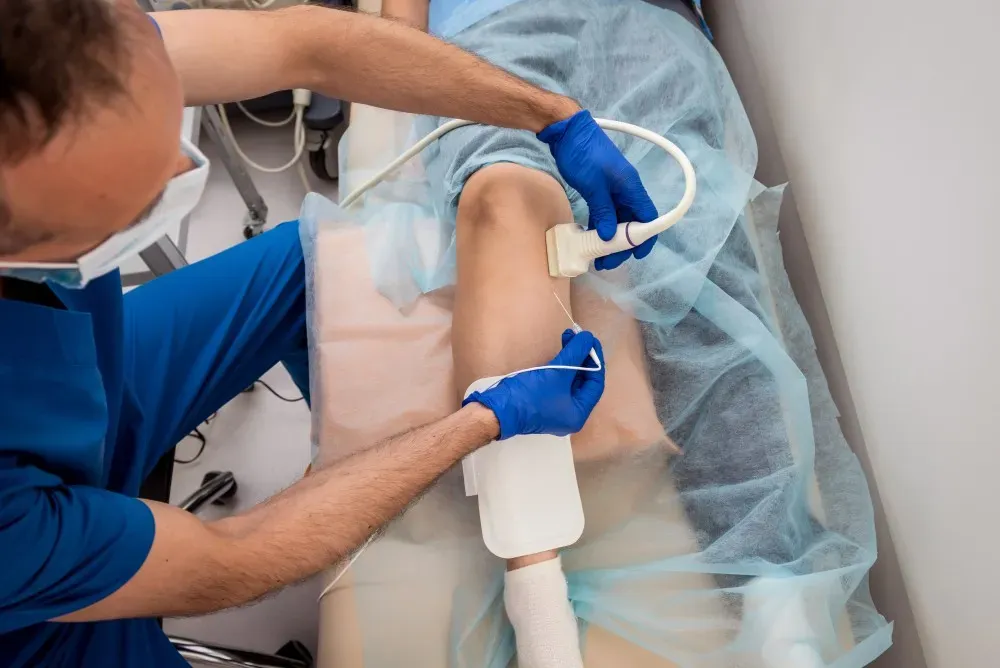
With RFA, we use imaging guidance to deliver radiofrequency energy to nerves that create chronic pain signals. Heat from an RFA probe creates a lesion in the target nerve that disrupts pain transmission, reducing or eliminating the pain you perceive from your problem joint.
Are you a candidate for RFA?
When chronic joint pain doesn’t respond to conservative therapies, including pain medication, RFA may be an effective alternative for some patients. Before performing an RFA procedure, we explore its viability with diagnostic nerve blocks.
By injecting anesthetic into the nerve we suspect is causing your chronic pain, we can confirm that an RFA treatment will reduce or eliminate your pain. Your candidacy depends on the source of your pain, your treatment history, and general health.
Patients with chronic pain from the facet joints in the spine, hip, knee, or shoulder joint problems may benefit from an RFA session if the diagnostic block proves successful.
What to expect after your RFA treatment
Usually performed as an outpatient procedure, RFA sessions generally last 30 minutes to two hours, depending on the location and the number of nerves we’re treating. You may have some discomfort around the target area after your treatment.
Pain relief from RFA tends to ramp up as the nerve lesion forms. That differs from the nerve block, which uses a fast-acting local anesthetic. It can take up to three weeks for RFA to provide noticeable relief, but some patients experience pain reduction for up to two years.
Results, however, vary widely between patients, usually lasting 6-18 months.
Find out more about RFA for chronic joint pain by booking a consultation with Metro Anesthesia & Pain Management at our nearest location. Call or click to request an appointment today.